
Insights

Those who understand compressed air can achieve real savings

Share

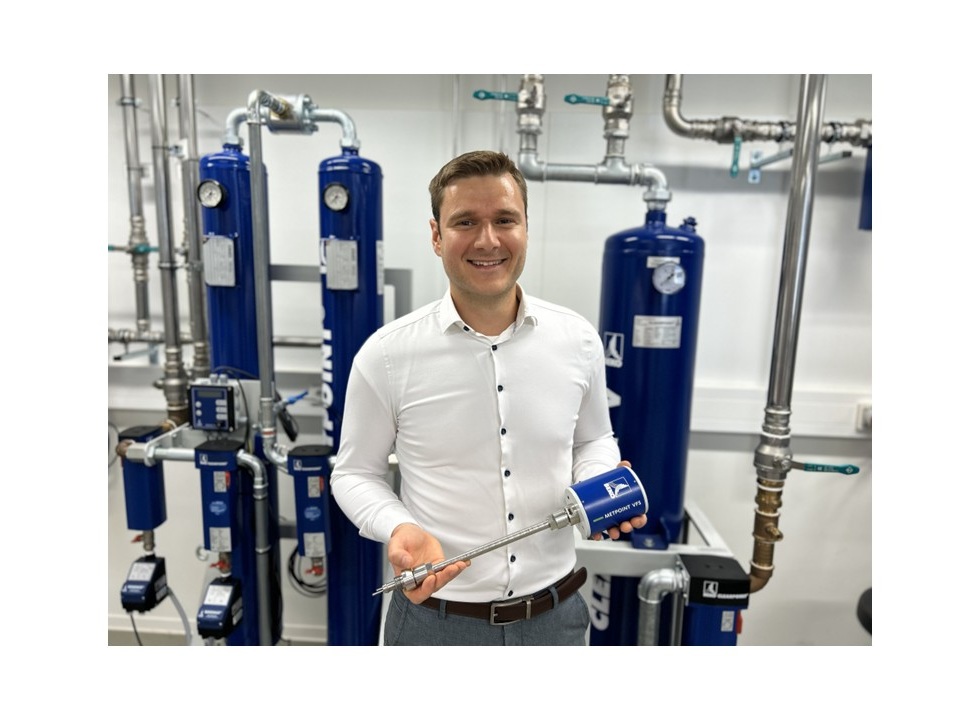
Compressed air is one of the most cost-intensive forms of energy in industry – and in many companies it remains a real blind spot. Where and how much compressed air is consumed, where leaks occur or whether a system is actually operating efficiently often remains unclear. In this interview, Marcel Nelke, Product Manager for Measurement Technology at BEKO TECHNOLOGIES, explains why it pays to take a closer look – and how modern flow sensors help not only to monitor processes, but to truly improve them.


About the person

NameMarcel Nelke

PositionProduct Manager Measurement Technology

HobbiesTable tennis

Why Measuring Compressed Air Pays Off – An Interview with Marcel Nelke

Marcel, why should companies measure the flow rate in a compressed air system?

Many companies don’t actually know how much compressed air they consume – and even fewer know how efficiently they use it. Flow rate is a key and highly meaningful parameter in this context. If I know how much air is being consumed and where, I can optimise processes in a targeted way, detect leaks and reduce overall energy consumption. Without this data, the system remains a black box.

What does that mean in day-to-day operations – how does a company benefit?

Very directly: measurement saves money, time and resources. A good example is leak detection. In many systems, small leaks cause compressed air to escape continuously – and that quickly adds up to several thousand euros per year of wasted compressed air. With flow measurement, such losses can be detected at an early stage.

Or take a production line where air consumption suddenly increases: without measurement, this often only becomes apparent once problems occur. With real-time data, I can react immediately – or carry out predictive maintenance before downtime happens.

What role does energy efficiency play here?

A very significant one. Compressed air is one of the most expensive energy carriers in industry. If I avoid unnecessary consumption, I reduce not only operating costs, but also overall energy demand. An example: if a company reduces its air consumption through better control, it not only lowers its electricity costs but also significantly reduces its CO₂ emissions. This is active environmental protection that pays off – especially with regard to ESG targets or ISO 50001.
 

A major topic even for smaller companies

In principle, it affects anyone working with compressed air – whether automotive suppliers, food producers or machine tool manufacturers. Smaller companies in particular often benefit greatly, because they still have significant untapped savings potential. Our sensors are designed for easy integration – even retrofitted into existing systems. That significantly lowers the barrier for users to give it a try. 

Looking briefly at the technology – what are the differences between the METPOINT VFS TI and METPOINT VFS TM sensors?

Both sensors reliably measure flow rate, consumption, flow velocity and temperature – but there are clear differences when it comes to installation.

The METPOINT VFS TI is an insertion-type sensor with particularly flexible installation options. It is ideal for retrofitting into existing pipelines. The probe length can be selected as required, an integrated line laser supports precise alignment during installation, and an additional sensor even monitors the position during operation – ensuring consistently accurate measurement results.

The METPOINT VFS TM, by contrast, is supplied fully preassembled in an integrated measuring section. That means: unpack, install, measure – without any additional alignment effort. Depending on the application, this can save time during installation, especially in new systems.

What is personally most important to you about this topic?

I find it fascinating how much impact can be achieved with relatively simple measures. It’s not just about technology, but about making processes more transparent. When I see how our sensors help a customer reduce compressed air costs significantly and planning maintenance much more effectively, I know we are delivering real added value. And that is motivating.


Conclusion: Small measure, big leverage

Flow measurement may seem like a small detail at first glance – but in practice it is often the key to a more efficient, more sustainable and more stable compressed air system. With METPOINT VFS sensors, this transparency is easier to achieve than ever before.

Curious to learn more?
Find out more about METPOINT VFS sensors