Our activities for climate and environmental protection

Our approach to climate change, energy efficiency, and water resources

Our contribution to a changing mechanical and plant engineering industry

The world is transitioning to a climate-neutral economy. This poses particular challenges for the mechanical and plant engineering industry. In addition to decarbonization, the focus is on the efficient use of scarce resources and greater transparency in upstream and downstream supply chains. We take a holistic and systematic approach to assessing our environmental impact in order to overcome the challenges facing us and our customers.

We demonstrate responsibility for the environment and social interaction. We reflect on ourselves every day, learn from each other, and always seek the best solution.

Norbert Strack, Board of Management

Analyze, measure, and reduce in a targeted manner

Corporate carbon footprint

As part of the double materiality analysis, we analyze the environmental impact of our business activities in order to understand and continuously improve them.

To measure our progress, we record our global Corporate Carbon Footprint in accordance with the internationally recognized Greenhouse Gas Protocol. We take into account emissions from Scope 1, Scope 2, and selected areas of Scope 3. The results create transparency and support targeted reduction measures.

Our global corporate carbon footprint in Scope 1 was 1.215 t CO2e and Scope 2 was 698 t CO2e. The share of renewable electricity was 53 % and renewable energy 25 %. Scope 3 data will be published with our first Impact-Report for the year 2025.

Our Principles

Reducing energy consumption and carbon emissions

Efficient energy management is an important solution for our customers and us to reduce energy consumption and direct carbon emissions. We are moving forward step by step and continuously, working according to the principles: Avoid. Reduce. Improve.

  • Avoid
    • We constantly review our processes with regard to energy conservation and continuously implement optimizations.
    • We monitor our resource flows and promote resource efficiency.
  • Reduce
    • We reduce energy consumption by utilizing new solutions and optimized processes.
    • We have a plan and are continuously working on improvements in energy reduction and energy effiency.
  • Do better
    • We explore new solutions, engage in intensive exchanges within our network, and learn from each other.
    • We prioritize energy from renewable sources.
Energy efficiency in practice

Our activities and results to reduce our energy consumption

  • Heat recovery from compressor systems for heating buildings
    (Neuss, Netphen, USA)
  • Conversion to energy-efficient LED lighting
    (Neuss, Netphen, Löffingen, USA)
  • Energy-efficient, light-flooded logistics hall
    (Neuss)
  • Expansion of green roofs to improve heat protection and thermal insulation
    (Neuss)
  • Increasing the share of renewable energies, including through:
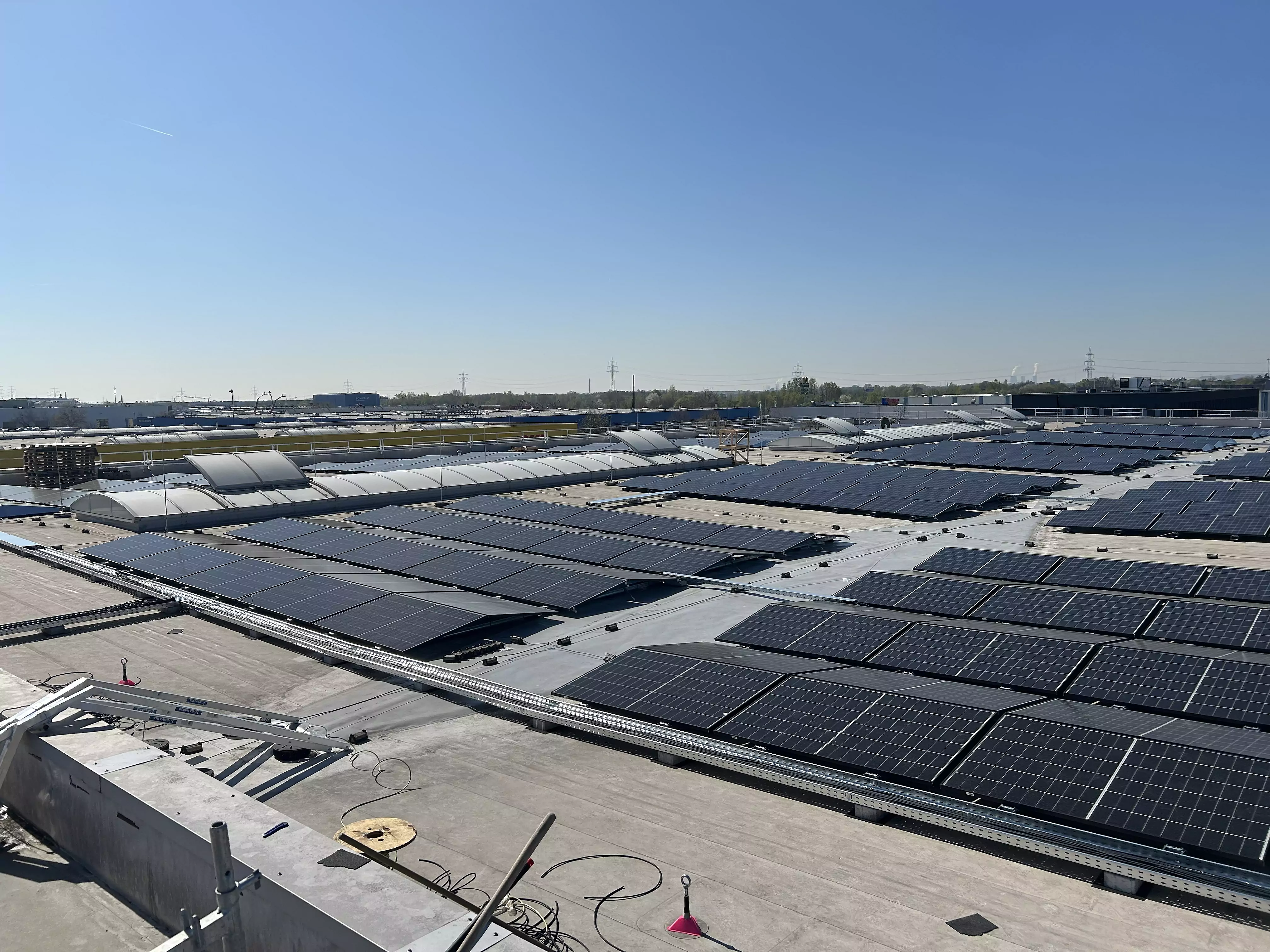
    • Photovoltaic systems with a total output of just under 1,100 kWp (Neuss, Netphen, USA, Netherlands)
    • Use of heat pumps (Netphen)
    • 100% green electricity at our three production sites in Germany
    • Expansion of e-mobility, including charging infrastructure for company and employee vehicles (Neuss, Netphen) and bike leasing offer for employees (Neuss, Netphen, Löffingen)
Facts from 2024

Key figures and results

  • 100 % share electricity from renewable sources 
    in 3 production units in Germany
  • 53 % share electricity from renewable sources, worldwide
  • 25 % share energy from renewable sources, woldwide
  • Just under 1100 kWp performances with solar systems, worldwide
Water resources

Water – a precious commodity

Water is becoming increasingly scarce worldwide. Responsible use is therefore becoming ever more important – both in our own operations and along the value chain. Our goal is to systematically reduce water consumption and water pollution. BEKO TECHNOLOGIES saves water wherever possible and is continuously working on further reductions.

Compressed air is often contaminated with oil from technical processes and the ambient air drawn in by the compressor. Our oil-water separation systems ÖWAMAT, QWIK-PURE and BEKOSPLIT help customers treat the condensate generated in compressed air systems so that it can be discharged in compliance with legal requirements – reliably, environmentally friendly, and economically.

Did you know?

One liter of oil can contaminate up to one million liters of water. In 2024, our oil-water separation systems retained around 398 tons of oil from compressed air systems at our customers' sites and kept it out of the wastewater. This corresponds to approximately 12 tanker trucks with a capacity of 30,000 liters each or – in terms of water pollution avoided – around 177,000 Olympic swimming pools, each containing 2.5 million liters of water.

More on sustainability at BEKO TECHNOLOGIES

You might also be interested in

Our activities related to our employees

We see our employees as the source, driving force, and guarantor of our success, and we offer a working environment in which they can develop, feel valued, and feel comfortable.


Sustainable corporate governance

As one of the leading companies in the filtration and treatment of compressed air in industrial processes, we are committed to sustainable corporate management that balances ecological, economic, and social aspects.